Landfall London
Moving from the US to London
Most Americans who move to the UK for work land in London. This guide covers what works differently in England, what to ask your employer before you go, and where to live, from Kensington to the Surrey suburbs.
What's different in London
London follows the rules for England. These are the parts that most often surprise Americans.
Nothing is binding until exchange
You make an offer through the estate agent, but either side can walk away until contracts are exchanged, often months later. You arrange your own survey.
Stamp Duty Land Tax
You pay SDLT to HMRC. Higher rates apply if you still own your US home, and there's a 2% surcharge if you buy before you're UK resident.
Most flats are leasehold
You own a lease for a set number of years and pay service charges, and sometimes ground rent. Always check how many years are left.
Rolling tenancies since May 2026
Under the Renters' Rights Act, private tenancies in England have no fixed term. You can leave with two months' notice, and landlords need a legal reason to end one.
Set by each borough
For a Band D home in 2026/27 it ranged from £1,028 a year in Wandsworth to over £2,000 in several boroughs. Check the borough before you choose.
GCSEs and A-levels
State school places depend mostly on where you live, and you apply through your home council. Secondary applications close on 31 October, the year before entry.
Tap in, tap out
Use a contactless card or phone on the Tube, buses and trains: daily and weekly caps limit what you pay. Driving into the center costs £18 a day.
NHS England
Register with a local GP practice once you have an address. Prescriptions have a set charge in England, unlike in Scotland.
Where to live
Area guides covering property, schools, social life, travel and community, each with a printable brochure. The average London home sold for £554,000 in August 2026.
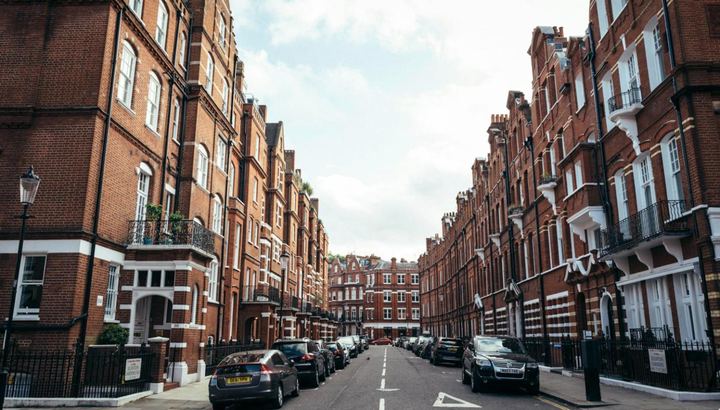 Kensington & ChelseaClassic central London: garden squares, museums and the highest prices in the UK.Read the area guide →
 North LondonSt John’s Wood, Hampstead and Islington: the American School, the Heath and village high streets.Read the area guide →
 South West LondonFulham, Clapham, Wimbledon and Richmond: family houses, the river and big parks.Read the area guide →
 City & East LondonCanary Wharf, Shoreditch and Greenwich: modern flats, short commutes and the Elizabeth line.Read the area guide →
 Surrey & the commuter beltCobham, Esher, Weybridge and Guildford: big gardens, American schools and trains to Waterloo.Read the area guide →
Relocating for work
Moving to London with your employer
A company move takes care of a lot, but not everything. Here's what to check before you sign, and how we work with employers.
Questions to ask about your package
- Who pays for temporary housing, and for how long?
- Is there help with finding a school, and with school fees?
- Will you be paid through UK payroll, US payroll or both, and who prepares your US and UK tax returns?
- Is there tax equalization, or a tax briefing before you move?
- Will the company sponsor visas for your whole family and pay the Immigration Health Surcharge?
- Are shipping, flights home and a settling-in allowance included, and what happens if the assignment ends early?
Leah can help with the practical side, like choosing an area and a school, alongside your relocation company. Tax and visas need qualified specialists, and we can introduce you.
Landfall for employers
We help companies look after American employees and their families moving to the UK: a personal move plan for each family, area and school guidance from someone who has made the same move, and a community to join when they land.
We work alongside your relocation provider and introduce regulated specialists for tax and immigration where they're needed.
Sources. Figures checked in November 2026: UK House Price Index, council tax levels 2026/27, GOV.UK guidance on the Renters' Rights Act and TfL on the Congestion Charge.
General information, not personal tax, financial, legal or immigration advice.